
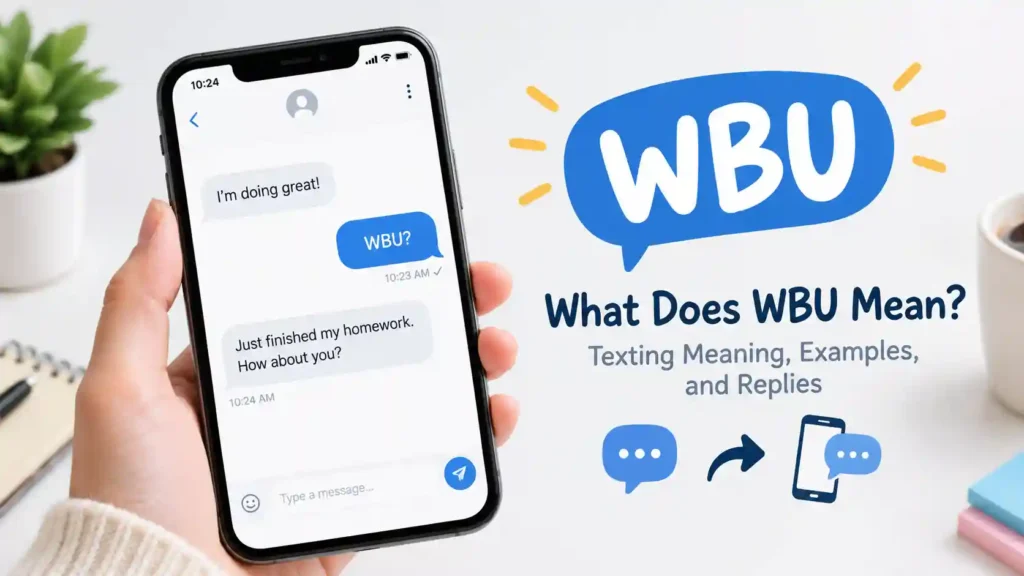

What does WBU mean is a common question among people who see this abbreviation in text messages, social media comments, and online chats. WBU stands for “What About You?” People use it to ask another person the same question they were just asked. It keeps conversations moving without typing a long sentence. For example, someone might write, “I’m doing great, WBU?” This simply means, “I’m doing great. What about you?”
WBU can feel confusing when someone sees it for the first time. However, its meaning becomes clear when the surrounding conversation is considered. People often use it after sharing their feelings, plans, interests, or opinions. Instead of repeating the full question, they use three letters to return the conversation to the other person. Therefore, WBU is a quick and friendly way to show interest during everyday digital conversations.
What Does WBU Mean on Social Media?
Social media users often prefer short messages because they make conversations faster. WBU fits naturally into this style of communication. People may use it on Instagram, Snapchat, TikTok, Facebook, and other platforms. Its meaning usually stays the same across these spaces. However, the tone can depend on the conversation, the relationship, and the words surrounding it.
Why People Use WBU in Online Conversations
WBU helps people ask questions without writing a complete sentence. For instance, a friend might say, “I’m watching a movie tonight. WBU?” The message asks what the other person plans to do. Similarly, someone might write, “I love summer. WBU?” to ask about another person’s favorite season. In both examples, the abbreviation saves time while keeping the conversation natural and easy to follow.
Does WBU Have Different Meanings on Different Platforms?
WBU generally means “What About You?” across popular messaging and social media platforms. Its basic meaning does not change simply because someone uses a different app. However, the surrounding message may affect how it sounds. A friend might use WBU casually, while a new online contact may use it to keep a conversation going. Context remains the best way to understand the intended message.
Is WBU Formal or Informal Language?
WBU is informal language, so it works best in relaxed conversations. Friends, relatives, classmates, and familiar online contacts commonly use abbreviations like this. However, WBU may look too casual in professional emails, formal letters, or messages to unfamiliar business contacts. In those situations, writing “What about you?” in full usually creates a clearer and more professional impression.
How to Use WBU in Text Messages
Using WBU is simple because it usually follows a statement or answer. One person shares information, and the other person gets invited to share something similar. For example, someone might answer a question about their weekend before adding WBU. This pattern makes conversations feel balanced because both people get an opportunity to speak. Still, the abbreviation works best when the other person understands the topic being discussed.
WBU Meaning in a Daily Conversation
Imagine two friends discussing their day. One writes, “My day was pretty good. WBU?” The other person understands that the question asks about their own day. Another example might be, “I’m staying home tonight, WBU?” Here, the sender wants to know the other person’s plans. These examples show how WBU can replace a longer question without changing the main message.
WBU Meaning When Asking About Feelings
WBU can also help people discuss their feelings or personal experiences. For example, one person might write, “I’m feeling much better today, WBU?” The question invites the other person to share how they feel. Similarly, a student could say, “I’m nervous about tomorrow’s exam. WBU?” This creates an opening for an honest conversation. However, sensitive discussions may benefit from complete questions that sound more caring and specific.
WBU Meaning When Discussing Interests
People also use WBU when discussing favorite activities, music, food, films, and hobbies. For example, “I enjoy action movies. WBU?” asks whether the other person enjoys them too. Likewise, “My favorite color is blue. WBU?” invites another preference. This approach makes it easy to discover shared interests. As a result, WBU often appears in conversations where people are getting to know one another.
What Does WBU Mean in Different Situations?
Although WBU usually means “What About You?”, its exact purpose depends on the topic. It can ask about someone’s mood, plans, choices, or personal preferences. The abbreviation does not provide a complete meaning on its own. Instead, the previous message usually explains what the sender wants to know. Reading the full exchange helps prevent misunderstandings and makes the conversation easier to follow.
WBU After Someone Asks “How Are You?”
When someone asks how another person feels, the reply might include WBU. For example, “I’m good, thanks! WBU?” means the sender is asking how the other person feels. It also helps return the friendly question. This type of exchange is common among friends and acquaintances. However, a more personal situation may call for a fuller response that shows greater care and attention.
WBU When Discussing Plans
WBU can ask about someone’s plans after the sender shares their own. For example, “I’m going shopping after work. WBU?” asks what the other person intends to do. It may also help friends decide whether their schedules match. Likewise, “I’m free on Saturday, WBU?” invites the other person to share their availability. The surrounding words make the intended question clear.
WBU When Sharing Opinions
People can use WBU to invite another opinion without repeating a full question. For example, “I think the new movie was excellent. WBU?” asks what the other person thought. Similarly, “I prefer tea over coffee. WBU?” invites a different preference. This use can encourage a balanced discussion because both people share their views. Nevertheless, sensitive topics may need a more thoughtful question than a short abbreviation.
WBU vs. Other Common Texting Abbreviations
WBU is one of many abbreviations people use in digital conversations. Others include WYD, HBU, HRU, and IDK. These expressions can look similar because they shorten everyday questions or answers. However, each abbreviation serves a different purpose. Learning their meanings makes messages easier to understand and helps readers choose the right expression for each situation.
WBU vs. HBU
WBU means “What About You?”, while HBU usually means “How About You?” These phrases are closely related and often work in similar situations. For example, “I’m doing well. HBU?” asks about the other person’s condition. Meanwhile, “I like this song. WBU?” asks for the other person’s view. In everyday texting, the difference is often small, and both expressions can sound natural.
WBU vs. WYD
WYD stands for “What You Doing?” or, in standard wording, “What Are You Doing?” It asks what someone is doing at that moment. WBU instead asks about the other person in relation to an earlier statement or question. For example, “I’m studying. WBU?” may ask what the other person is doing, depending on context. However, “WYD?” directly asks about their current activity.
WBU vs. HRU and IDK
HRU usually means “How Are You?” and is used to ask about someone’s well-being. IDK means “I Don’t Know” and expresses uncertainty. WBU asks the other person to share their own answer or opinion. Although these abbreviations appear in similar chats, their purposes differ. Understanding the full message helps readers identify the correct meaning instead of guessing from the letters alone.
How to Reply When Someone Sends WBU
A good reply to WBU usually answers the question that came before it. If someone asks about feelings, the response can describe their mood. If the conversation concerns plans, the reply can explain what they intend to do. There is no single response that works in every situation. Instead, a natural answer should match the topic and the relationship between both people.
Friendly Replies to WBU
Friendly replies can be short, clear, and relaxed. For example, someone might answer, “I’m doing great too!” after discussing their mood. If the conversation concerns hobbies, a suitable response could be, “I love comedy movies.” These replies share useful information without making the conversation feel forced. Adding a follow-up question can also help keep the discussion going when both people want to continue chatting.
Casual Replies to WBU About Plans
When WBU refers to plans, the answer can explain what someone expects to do. For example, “I’m just relaxing at home” works when discussing evening activities. Another reply might be, “I haven’t decided yet.” Both responses answer naturally without requiring extra details. If the sender wants to make plans together, a clearer answer can help both people decide what to do next.
Polite Replies When the Meaning Is Unclear
Sometimes, the previous message may not make the intended question obvious. In that case, asking for clarification is better than guessing. A person could reply, “Do you mean how I’m doing?” or “Are you asking about my plans?” This approach prevents confusion while keeping the conversation respectful. Most importantly, there is no need to feel embarrassed about asking what someone means.
When Should Someone Avoid Using WBU?
WBU is useful in casual messages, but it does not fit every situation. Abbreviations can save time, yet they may appear unclear or careless when the reader expects formal language. Therefore, the sender should consider the audience before using WBU. A message to a close friend may sound natural with abbreviations, while a workplace message may require complete sentences and a more professional tone.
WBU in School and Workplace Messages
Students may use WBU while chatting with friends about classes, homework, or weekend plans. However, school assignments and formal messages to teachers usually require standard wording. Similarly, workplace emails should favor clear language, especially when discussing tasks or deadlines. Writing “What about you?” instead of WBU helps prevent confusion. It also makes the message easier to understand for readers unfamiliar with texting slang.
WBU in Serious Conversations
In serious conversations, a short abbreviation may not express enough care or attention. For example, someone discussing a difficult personal experience may appreciate a thoughtful response. A full question such as “How have you been feeling about everything?” can sound more supportive. WBU is not automatically rude, but it may feel too casual in sensitive moments. The sender should match the language to the situation.
WBU When Communicating With New People
Some people understand common texting abbreviations, while others rarely use them. Therefore, WBU may confuse someone who has not seen it before. Using the complete phrase can make early conversations easier. Once both people share a similar texting style, abbreviations may feel more natural. Clear communication matters more than shortening every message, especially when two people are still learning about each other.
Why WBU Remains Popular in Digital Communication
Short forms are common in digital communication because they help people write quickly. WBU is especially useful because it turns a simple question into three letters. However, its value is not limited to saving time. It also helps people return questions, share experiences, and keep conversations balanced. Like other texting abbreviations, it works best when both people understand the meaning and the context.
Short Messages Make Conversations Faster
Typing a short abbreviation can be easier than writing a full sentence on a phone. This can make quick conversations feel more relaxed and less demanding. However, speed should not replace clarity. If a message becomes confusing, writing the complete question is often the better choice. For more background on digital communication, readers can explore Britannica’s overview of the Internet, which explains the broader technology behind online interaction.
WBU Helps Return a Question
A conversation feels more balanced when both people have a chance to respond. WBU makes this exchange simple by inviting the other person to share their own answer. For example, one friend can discuss a favorite meal before asking about the other person’s choice. This small exchange can help people discover common interests. Nevertheless, meaningful conversations depend on listening and responding thoughtfully, not simply using abbreviations.
Texting Slang Changes With Online Habits
Online language changes as people adopt new platforms, trends, and ways of communicating. Some abbreviations become widely recognized, while others remain limited to certain groups. WBU has a straightforward meaning that many casual texters recognize. Still, people should not assume every reader knows each abbreviation. Clear wording remains valuable, particularly when a message needs to be understood by different age groups or communities.
Texting abbreviations can make online conversations quicker, but their meanings may not always be obvious to new readers. Learning expressions such as WBU and WYF can help readers understand casual messages and communicate more clearly across social platforms.
Frequently Asked Questions
1. What does WBU mean in texting?
WBU means “What About You?” in texting and online chats. People use it after sharing information to ask the other person a similar question. For example, “I’m fine, WBU?” asks how the other person is doing. It is an informal abbreviation commonly used in casual conversations.
2. What does WBU mean from a girl?
When a girl sends WBU, it usually means “What About You?” The abbreviation itself does not prove romantic interest or any special intention. Its meaning depends on the conversation and the relationship between both people. It may simply be a friendly way to keep the chat going.
3. What does WBU mean from a guy?
When a guy uses WBU, it generally means “What About You?” He may be asking about someone’s plans, feelings, interests, or opinions. The abbreviation alone does not reveal whether he is flirting. The surrounding messages provide better clues about the conversation’s tone and purpose.
4. What is the difference between WBU and HBU?
WBU means “What About You?”, while HBU usually means “How About You?” Both expressions can return a question or invite another person’s opinion. In many casual conversations, their meanings overlap. The best choice depends on the sentence and the information being discussed.
5. How should someone reply to WBU?
The best reply answers the question being discussed. For example, someone can say, “I’m doing well too,” when talking about feelings. If the topic is weekend plans, a reply might explain what they intend to do. A natural answer keeps the conversation clear and comfortable.
6. Does WBU mean the same thing on Snapchat and Instagram?
Yes, WBU generally means “What About You?” on Snapchat, Instagram, and other social platforms. The app does not usually change the abbreviation’s meaning. However, the surrounding message can affect its tone. Reading the full conversation helps explain what the sender wants to know.
7. Is WBU rude or disrespectful?
WBU is not usually rude or disrespectful. It is a casual abbreviation used to return a question or invite a response. However, it may feel too informal in serious discussions or professional messages. A complete sentence can be more appropriate when the situation calls for extra care.
8. Should WBU be used in formal emails?
WBU is generally unsuitable for formal emails, academic writing, and professional communication. Writing “What about you?” makes the meaning clearer and sounds more polished. Abbreviations work better when both people share an informal texting style. Choosing the right wording helps communication remain respectful and easy to understand.
Conclusion:
Understanding what does WBU mean makes everyday texting easier. WBU stands for “What About You?” and usually invites another person to share similar information. People use it when discussing feelings, plans, interests, and opinions. Although it is common in casual digital conversations, its meaning depends on the surrounding message. Readers can understand it more easily by considering what was said before the abbreviation appeared.
For the clearest communication, WBU works best with friends and familiar contacts. In formal or sensitive situations, writing the full question may be more thoughtful. Learning related abbreviations, such as HBU, WYD, and HRU, can also help readers follow online conversations. Readers can explore more language and internet-related explainers on USA Magazine to build their understanding of everyday digital terms.


Pingback: What Does NSFW Mean? The Essential Guide